
Tensions escalate between Iran and the US over control of the Strait of Hormuz, a crucial shipping lane for global oil supplies, as both sides discuss extending a fragile ceasefire.

US President Donald Trump indicated that a peace deal with Iran is possible, but stressed that military action remains an option if talks fail. He emphasised the need for guarantees against nuclear weapons in any agreement.

Trump's comment marks a shift in his repeated statements that Iran hand over its enriched uranium to the US as a sticking point of any potential deal.

Alliances fight wars effectively only when they share an endgame. If Israel acted without US knowledge, then the military alliance is operating without real coordination at the level of strategic targeting. Neither picture is reassuring in a war that is no longer regional in its consequences. Prem Panicker continues his must read daily blog on the Gulf War.

In a development that could reshape West Asia's security landscape, US President Donald Trump announced Friday that he will convene an emergency meeting in the White House Situation Room to make a final decision on a broad, multi-part peace deal with Iran.

Crude oil futures surged over 3 per cent, snapping a three-session losing streak, as renewed military escalation in West Asia revived fears of supply disruptions, driving prices higher on both domestic and international exchanges.
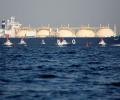
A Liquefied Natural Gas (LNG) carrier, chartered by an Indian firm, safely transited through the Strait of Hormuz -- the first Indian LNG tanker to cross the war-hit narrow shipping lane since the war in West Asia broke out more than three and a half months back.

The big question is whether Trump is any longer in command of the situation. For all practical purposes, the war seems set to cascade as the US is preparing for a potential ground operation in Iran and threatens to destroy 'bridges next, then electric power plants', points out Ambassador M K Bhadrakumar.

If the Iranian regime needs to be punished for promoting quasi-terrorist outfits like Hezbollah and Hamas, then what about Pakistan which has spent decades exporting terror around the world, killing thousands, particularly in Afghanistan and India? asks M R Narayan Swamy.

Iran's men's national soccer team wore black armbands and held schoolbags as their anthem played ahead of a match in Turkey on Friday, in what a team official said was a protest over the killing of schoolgirls on the first day of the Iran war.

Millions of people, including international representatives, are expected to attend the funeral of Iran's Supreme Leader Ayatollah Ali Khamenei in Tehran. His death occurred at the start of the US-Israel war on Iran. US President Donald Trump announced a week-long pause in bombing for the funeral, while India was represented by Governor Syed Ata Hasnain and MoS External Affairs Pabitra Margherita. The event is anticipated to be one of the largest gatherings in Iran's history, with ceremonies delayed due to security concerns.
Iranian Deputy Foreign Minister Kazem Gharibabadi has urged India to take the lead in bringing peace to West Asia, highlighting the UAE's role in stalling BRICS consensus on the conflict. Gharibabadi also discussed a new framework with Oman for merchant vessels passing through the Strait of Hormuz.

A top Iranian official has blamed the US and Israel for the disruption of global supply chains due to the West Asia conflict, stating that Tehran is not happy about the consequences faced by countries like India.
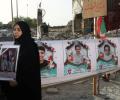
The United States and Iran are engaged in indirect talks aimed at developing a framework for a possible agreement, according to Iran's ISNA News Agency. Intensive mediation efforts are underway, but it remains uncertain whether a final agreement is within reach.

Iranian Foreign Minister Seyed Abbas Araghchi spoke with Indian counterpart S Jaishankar to discuss the West Asia crisis, following discussions with Russian President Vladimir Putin.

Former Central Command chief David H Petraeus suggests the US and Iran are likely to extend their ceasefire beyond the initial two-week period, citing willingness from both sides to continue negotiations.

Dropped Iran striker Sardar Azmoun has posted a heartfelt message on social media proclaiming his love for his country and wishing the World Cup squad well at the tournament without him.

In a post on Truth Social, Trump outlined key goals of the campaign, including degrading Iran's missile capabilities, dismantling its defence industrial base, eliminating naval and air power, preventing Tehran from acquiring nuclear capability, and protecting United States allies such as Israel, Saudi Arabia and the United Arab Emirates.

In his first major national address since hostilities began, Trump said the ongoing military campaign, dubbed 'Operation Epic Fury', has delivered 'swift, decisive, overwhelming victories'.

Former US President Donald Trump has criticised Iran's stance on the Strait of Hormuz, calling it a form of 'extortion' amid ongoing negotiations for a peace deal. The remarks come as Iran considers imposing transit fees on vessels crossing the strategic waterway.

Iran has warned of consequences for any collusion between the United Arab Emirates and Israel, following reports of a secret meeting between Israeli Prime Minister Benjamin Netanyahu and UAE President Mohamed bin Zayed Al Nahyan during Operation Roaring Lion.

The question nobody seems to ask is why a democracy should be silent when many of its citizens are concerned about the way the US is deviating from its traditional ways of consultation, cooperation and collaboration and moving away from traditional allies, asks Ambassador T P Sreenivasan.

'What we have yet to see on either the US or the Iranian side is willingness to compromise on their ultimate demands and the flexibility to reach an agreement to end the war.

'Iran cannot trust the USA because it considers the USA to be Israel-controlled. And no, the IRGC is not going to accept anything else but major US concessions.'

Donald Trump announced he is replacing the 20% reimbursement fee for securing the Strait of Hormuz with massive trade and investment deals from Gulf States into the United States, while maintaining a full blockade on Iranian ship traffic.

Iranian Foreign Minister Abbas Araghchi said his trip to Islamabad was "very productive" and involved "good consultations" with Pakistan's top leadership amid uncertainty over the second round of peace talks to resolve the war in West Asia.

Prime Minister Narendra Modi urged US President Donald Trump to prioritise the safety of Indian seafarers in the Strait of Hormuz during the implementation of Washington's proposed Iran peace deal, as both leaders focused on repairing strained bilateral relations at the G7 summit.

Karex, the Malaysian company that makes roughly one in five of the world's condoms -- about five billion a year, supplying Durex and Trojan among others -- announced this week that it is raising prices by up to 30 percent. The reason is the Strait of Hormuz.

Iran hosted a large send-off rally for its World Cup team in Tehran, despite ongoing concerns about visa issues for entry into the United States, where the team is scheduled to play its group matches.

India has denied making any payments to Iran to secure safe passage for its vessels through the Strait of Hormuz, following reports that Indian vessels were fired upon in the region.

Trump claims the United States is performing exceptionally well in its ongoing conflict with Iran, citing weakened Iranian military capabilities and a strong US position.

History is rarely decided by who has the biggest weapons, but by who has the better process. The same rule applies to investing, says Ramalingam Kalirajan.

Despite decades of efforts towards energy transition, oil will remain the critical energy source for all nations for some decades. We can hope for peace opening the Strait of Hormuz, but must prepare for war closing it, points out former foreign secretary Ranjan Mathai.

Russian President Vladimir Putin has offered his support to help bring peace to West Asia, praising the Iranian people for their resilience. This comes as Iran seeks to resolve the conflict with the US, following discussions with Pakistani and Omani leadership.

A new assessment by the Institute for the Study of War (ISW) reveals that a power struggle within Iran's leadership, with hardliners gaining influence, could significantly impact future negotiations with the United States.

A sensational New York Times report alleging that Israel's Mossad secretly groomed former Iranian president Mahmoud Ahmadinejad to lead a post-Islamic Republic Iran is being scrutinised for its strategic timing amidst Iran's sensitive post-Khamenei transition.

US President Donald Trump on Monday doubled down on his hardline stance against Tehran while dismissing mainstream media narratives regarding his foreign policy motivations.

'We caught General Pervez Musharraf talking over the phone with his Chief of General Staff Lieutenant General Mohammad Aziz. Musharraf was visiting China; Aziz was in Rawalpindi.'

Following a US agreement to a ceasefire, Iran claims victory and outlines conditions for a lasting peace deal, including control over the Strait of Hormuz and the removal of sanctions.

10 stocks from the Nifty 200 index that offer good growth potential and scope to deliver decent returns from current levels, based on brokerage estimates.
